





















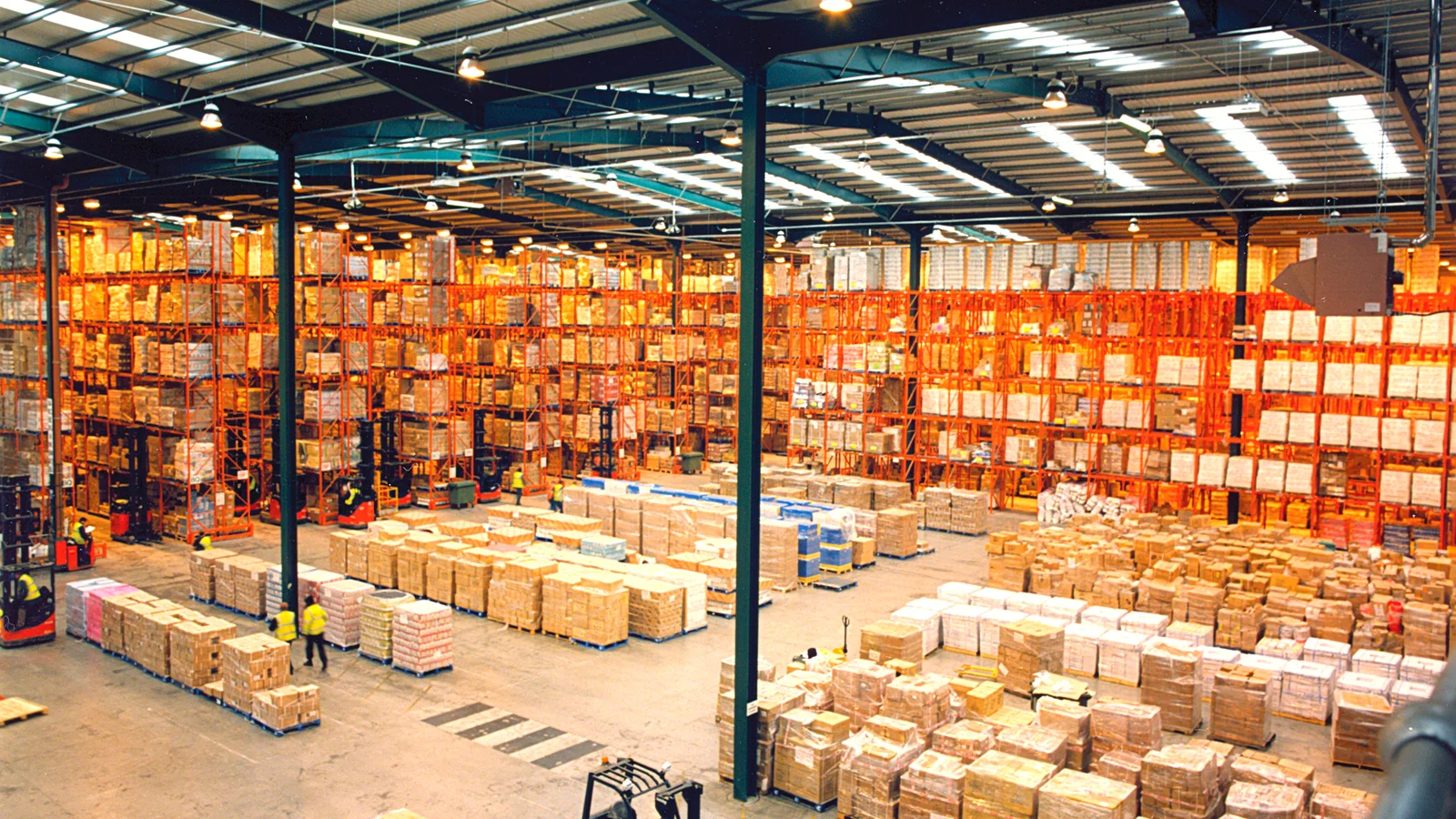
Warehouse and inventory management starts from records, and in a study of nearly 370,000 inventory records from 37 stores of one retailer, 65% of them were inaccurate. DeHoratius and Raman reported this in Management Science and found that auditing practices mitigate the problem, while the complexity of the store environment and the distribution structure exacerbate it.
A label that nothing validates: the Pit Viper case
Pit Viper, a sunglasses brand that the case study describes as having a fulfillment team of about 20, ran its shipping on label-generator software. In ShipBob’s case study, which cites 2022 order volumes, Operations Manager Jourdan Davis says the software made labels and could not validate which product went out. A label might say to pick 3 of specific sunglasses, and any type could be sent. Davis says that happened frequently.
After the company adopted ShipBob’s warehouse management system, Davis puts order accuracy at about 92% before and 99.7% after, which he equates to 2,100 fewer mispicks a year on average. The metrics were supplied by the merchant, and ShipBob makes no representation about their accuracy. “Multiple checks from start to finish” was, in Davis’s words, one of the biggest reasons the company chose ShipBob.
The cost of a wrong pick shows in how Pit Viper handles it: when a misshipment happens, the company typically lets the customer keep the product, because getting it back is more work, and Davis says the system eliminated the need for double shipping.
Onboarding meant syncing Pit Viper’s SKUs, mapping the warehouse and connecting the Shopify and NetSuite integrations, and ShipBob staff came to the facility for a week. Davis also says the system shows how many orders an employee can complete in an hour, which the team uses to forecast labor.
ERP module or WMS: what SAP says
SAP states that for most businesses the standard warehouse module in their ERP is sufficient: it tracks bin locations, handles basic receiving and manages shipping. A WMS adds task interleaving, which combines put-away and picking so forklifts are used efficiently, and advanced slotting, which recommends placing high-turnover items nearer to the shipping areas. SAP sells both an ERP and a WMS, so this is a vendor’s view of its own product line. Picking has its own numbers: a literature review from 2007 in the European Journal of Operational Research calls order picking the most labour-intensive and costly activity for almost every warehouse and estimates its cost at as much as 55% of total warehouse operating expense. Bartholdi and Hackman describe a WMS as checking each order against available inventory and identifying any shortages.
Where the dock sits
In their chapter on storage areas for unit loads such as pallets, Bartholdi and Hackman state that the layout of the warehouse determines the cost associated with each storage location. With receiving and shipping on opposite sides of a warehouse, many locations are equally convenient, and the most convenient ones lie on the line between the two. When receiving and shipping share one dock, there are very few very convenient locations and some very inconvenient ones.
NetSuite’s layout guide adds two shapes. A U-shaped warehouse must allot enough space between the shipping and receiving bays to prevent bottlenecks. An I-shaped layout gives an assembly-line style flow that can speed up operations with high order volume.
Dock position also sets how fast a container can be stripped. A container load plan that puts the fast movers at the doors saves handling on the receiving side of warehouse and inventory management.
Holding stock near far customers
Canada is Pit Viper’s second largest market, and it was the first place the company outsourced international fulfillment to ShipBob, followed by Melbourne. Davis says customers in Australia no longer wait the typical 2 weeks to a month for a package from the United States, and that more customers now get their orders in days instead of weeks.
In Canada, the biggest lift was getting products to the fulfillment center and forecasting inventory. A forecast for a foreign warehouse depends on when inbound stock lands, which container tracking shows per box.
What a provider’s carrier rates look like
The provider 3PLGuys says that at its Paramount, California facility its negotiated FedEx volume rates are typically 15-30% off retail on common parcel sizes, and that customers can use them without a FedEx account of their own. That is a vendor’s own claim for common parcel sizes, so a seller would want to see the rate sheet.
Frequently asked questions
How accurate are retail inventory records?
Less accurate than most teams assume. DeHoratius and Raman studied nearly 370,000 records from 37 stores of one retailer and found 65% of them inaccurate. Auditing reduced the problem, while store complexity and the distribution structure made it worse.
Do I need a WMS or is an ERP warehouse module enough?
SAP says the standard ERP warehouse module is enough for most businesses: bin locations, basic receiving and shipping. A WMS adds task interleaving and advanced slotting, which matter when picking volume grows. Note that SAP sells both.
What share of warehouse cost is order picking?
A 2007 literature review in the European Journal of Operational Research estimates order picking at up to 55% of total warehouse operating expense, calling it the most labour-intensive and costly activity in almost every warehouse.